Mound & Alternative Septic Systems in Asheville, NC
Asheville Drain Field Pros builds mound and alternative septic systems alongside drain field replacement and repair, complete system installation, tank replacement, soil testing and design, line and baffle repairs, and commercial septic work. We work steep and rocky parcels, valley farmland, and cabin lots across Buncombe, Madison, and Henderson counties, North Carolina.
These systems run on equipment a gravity field does not have. An effluent pump in a dosing chamber, floats reading the level, and a control panel with an audible alarm on the wall. Pressure distribution laterals carry small orifices spaced along their length, so a timed dose loads the whole bed evenly and then leaves it alone to drain. Imported washed mound sand is the treatment soil the site did not come with, placed and shaped to a design. Set that against a gravity run, which floods the first trench hardest and can leave the far end dry and unused for years.
Separation, in Plain Words
Between the bottom of a trench and whatever is underneath it, whether that is bedrock, hardpan, or the seasonal high water table, there has to be a depth of clean unsaturated soil. That soil is the treatment. The county sets the number. Have it, and the field goes in the ground. Miss it, and the field gets built above grade in material that was trucked in.
What Gets Built Here
A classic mound is not the only answer on Blue Ridge ground. Fill systems raise the absorption area with imported material without the full mound profile. Low pressure pipe runs shallow dosed laterals that follow a slope, which suits our terrain well. Dosed low-profile fields sit lower than a mound and take less lawn. An at-grade is the flattest relative of the same idea. Which one the county approves comes out of the soil evaluation and the design, not out of a preference.
Footprint and Lawn
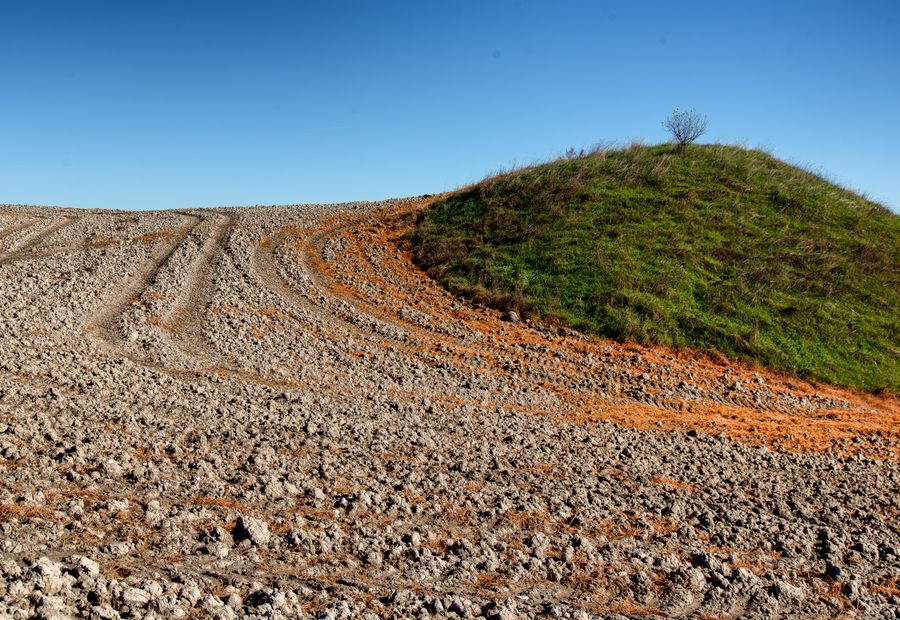
These take up room and they show. A mound is a visible landform in a yard and it stays one, though grass covers it and it mows like the rest of the lawn. Nothing parks on it, nothing gets built on it, and the sides matter as much as the top. Plan the driveway, the shed, and the play area around it rather than into it.
Booking
Engineered systems take longer on paper than in the ground, so start early. We handle the soil work, the design coordination, and the county paperwork, then dig when the site is workable. Call (828) 528-7231.
Why does my lot need a mound instead of a normal drain field?
Because the ground under a conventional trench has to have a depth of clean unsaturated soil below it before it hits rock, hardpan, or seasonal water. That depth is what treats the effluent. When a site does not have it, the soil gets brought to the site and built above natural grade instead. Around Asheville the usual cause is rock sitting close to the surface. On flatter valley ground it is more often water standing high in a wet season. Neither is a defect in your property and neither is negotiable.
How much more does a mound system cost than a conventional field?
Meaningfully more, and the extra is easy to account for. Imported sand has to be bought, hauled, and placed, and hauling anything up a mountain drive is a cost line on its own. A pump, floats, and a control panel go in where a gravity field would have had none. The design is engineered rather than standard. And the finished footprint is larger, so more of the lawn is involved. It is not a premium option somebody sold you. It is the answer for a site that cannot take the cheaper one.
How long does a mound system last, and what maintenance does it need?
A well built mound runs a long time, and the components fail before the sand does. The pump is a wearing part and will need replacing. Floats hang up. The panel and alarm want checking. The tank ahead of it still needs pumping on schedule and still needs its filter cleaned. Keep vehicles and structures off the mound and the sides of it, keep the grass mown, and keep roof and surface runoff away from it. Neglect the pump and you will hear the alarm before you see the problem.
What is an aerobic treatment unit and would one help my site?
It adds air to the tank so bacteria treat the wastewater before it ever reaches the ground. Effluent leaving it is cleaner, and some jurisdictions will allow a smaller or shallower field on that basis, which can make a tight site workable. The trade is genuine and you should hear it out loud: it uses electricity continuously, it has a blower that wears, and it needs servicing on a schedule rather than when you get around to it. Your county decides whether one buys you anything.